
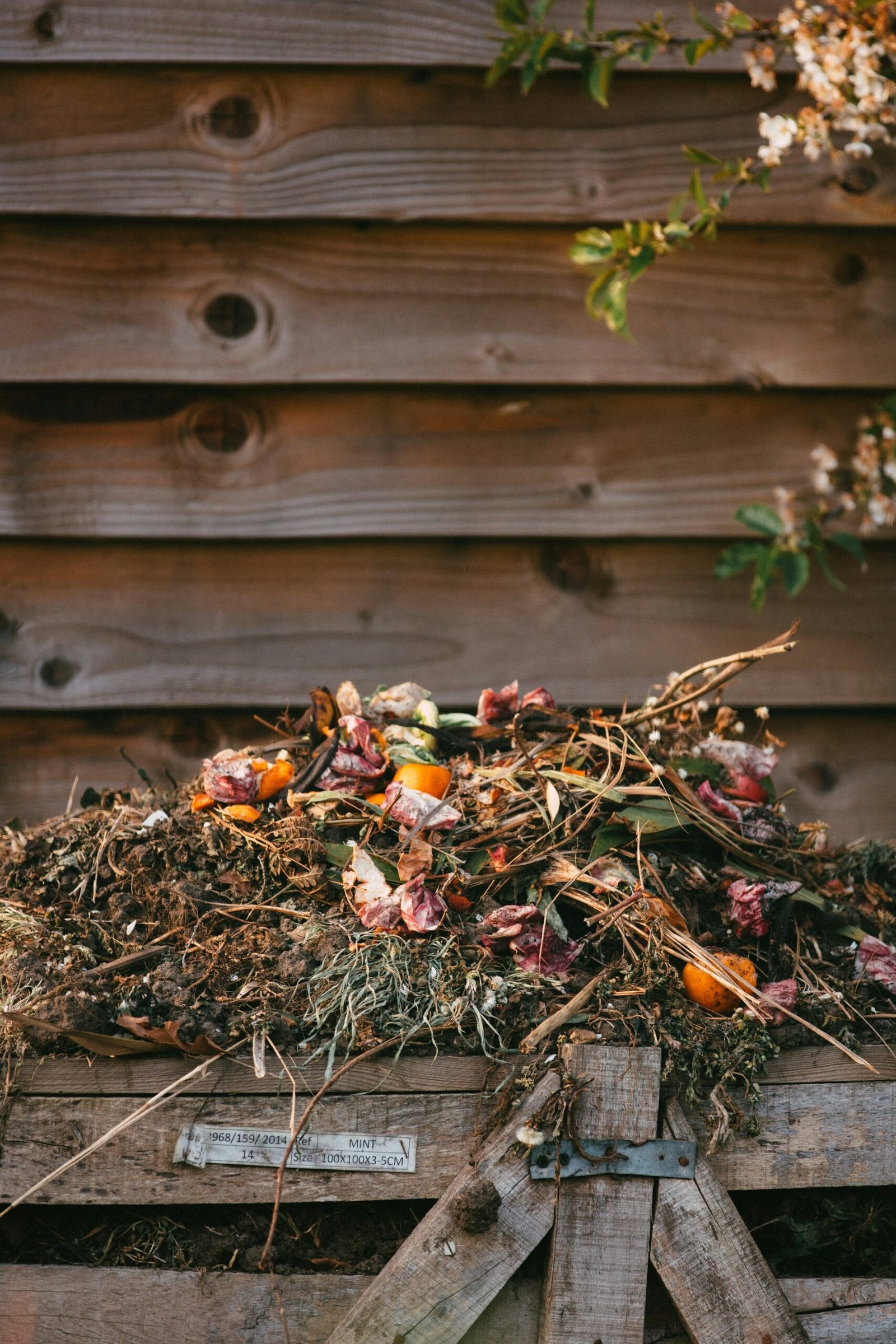
Turning green waste into compost – the process
The process is based on aerobic composting in open air and includes the following steps:
- Feedstock reception and quality control
Green waste is collected and inspected to ensure that only suitable materials enter the process. - Shredding and homogenisation
The material is shredded and mixed to achieve a consistent particle size, improving airflow and decomposition. - Open windrow composting
The waste is arranged in long piles (windrows), typically 3 metres high and 6 metres wide.
These piles are regularly turned to maintain oxygen levels and support microbial activity. - Refining and screening
Once composting is complete, the material is screened to remove larger particles and ensure a uniform final product. - Final handling
The finished compost is stored and made available for use in soil improvement.
The final product
The resulting compost contains organic matter and smaller amounts of nutrients such as nitrogen, phosphorus, potassium and calcium. It can be:
- Applied directly to agricultural land
- Used in landscaping, gardening and growing media
Guidelines are available to support proper application based on regional requirements. Quality tests, such as germination and plant growth tests, confirm its suitability for use.